by Nina
II.16 Suffering that has yet to manifest is to be avoided. —Yoga Sutras, trans. by Edwin Byrant
Melitta's post Aging, Diabetes and Yoga and Shari’s post Ruminations on Health reminded us that although yoga can be helpful for many conditions, it is far from a cure all. Melitta’s life is sustained through western medicine (that is, insulin), without which she would have died. And as Shari said:
My own personal pet peeve is the often unspoken allegation within alternative healthcare communities of “healthy living” that if you lived a more “pure and holistic life,” this illness or health problem wouldn’t be happening to you. Too many women I have known with breast cancer have felt the twinge of anxiety that they were the cause of their own cancers. But how much do we owe to our own genetic predispositions rather than to emotional and environmental stresses?
On the other hand, I think all three of us believe that yoga has something important to offer to people suffering from chronic and even terminal diseases or conditions: the reduction of suffering.
This message came home to me in a very powerful way when I attended a therapeutic workshop on yoga for cancer, taught by Bonnie Maeda, RN. As a nurse, Bonnie has a clear-eyed understanding that yoga cannot cure cancer and, indeed, that even western medicine cannot always do the job. So what she has been offering her students, along with a chance to move and regain strength, is the reduction of suffering. This was especially evident when she led us through a sequence that she had designed specifically for this particular set of yoga practitioners. The sequence—which was unlike any I’d ever seen before—was a gentle Vinyasa series that used the wall for support. Bonnie explained that she felt this particular group needed to engage their minds by moving mindfully from one pose to another as they followed their breath, but, because they were often weak from illness or treatments, the wall was necessary for support and safety. To be honest, I thought the sequence was brilliant! It was providing gentle exercise for people who needed to build up their strength, while at same time functioning as a mindfulness practice to help focus minds on the present and distract from worries about the future.
After the movement came supported poses and relaxation. Stress management is also invaluable for people with chronic illnesses as it can help reduce both physical and emotional pain, as well as supporting healing. As we’ve mentioned before on this blog, yoga provides such a wide range of stress management tools (meditation, breath awareness, pranayama, conscious relaxation practices, restorative poses, supported inverted poses, and active practice to release physical tension) that there is something suitable for almost everyone.
For those of us who are teachers, it is important for us to remind ourselves both of the limitations of what we can offer and of the simple but powerful solutions that we can provide. Both mindful movement and stress management techniques are safe practices that can help reduce the suffering of people enduring great challenges.
And as human beings, it is heartening to remember that there are powerful practices we can rely on when difficulty arises.
Showing posts with label mindfulness. Show all posts
Wednesday, February 20, 2013
Monday, December 10, 2012
Practicing Yoga Mindfully
by Nina
Although it’s a rather new concept, approaching yoga poses as a mindfulness practice is a very powerful tool for improving your physical and mental health. Whether you are trying to change your eating habits, reduce your stress, or heal from disease, learning to listen to your body is crucial. In his wonderful book Full Catastrophe Living, Jon Kabat-Zinn points out what happens if we simply operate in automatic-pilot mode:
"One very important domain of our lives and experience that we tend to miss, ignore, abuse or lose control of as a result of being the automatic-pilot mode is our own body. We may be barely in touch with our body, unaware of how it is feeling most of the time. As a consequence we can be insensitive to how our body is being affected by the environment, by our actions, and even by our own thoughts and emotions. If we are unaware of these connections, we might easily feel that our body is out of control and we will have no idea why."
Kabat-Zinn goes on to say that physical symptoms are the messages your body is giving you that allow you to know how it is doing and what its needs are.
"When we are more in touch with our body as a result of paying attention to it systematically, we will be far more attuned to what it is telling us and better equipped to respond appropriately. Learning to listen to your own body is vital is improving your health and the quality of your life."
And one of the best ways to pay attention to your body systematically is to bring mindfulness into your asana practice. I, myself, have learned to recognize certain physical symptoms that tell me when I’m overstressed (for example, a burning feeling in my chest). When I experience those sensations, I know it’s time for me to scale back temporarily and practice the yoga poses that calm me down. In my interview with Elizabeth (see Meditation and Healthy Eating) about mindfulness and eating, she talked about learning, from both meditation and asana practice, to recognize when she was actually hungry versus thirsty or had low potassium and that has helped her lose and keep off 50 pounds.
So how you make your asana practice a mindfulness practice? Kabat-Zinn writes:
"We practice the yoga with the same attitude that we bring to sitting meditation or body scan. We do it without striving and without forcing. We practice accepting our body as we find it, in the present, from one moment to the next. While stretching or lifting or balancing, we learn to work at our limits, maintaining moment-to-moment awareness. We are patient with ourselves. As we carefully move up to our limits in a stretch, for instance, we practice breathing at that limit, dwelling in the creative space between not challenging the body at all and pushing it to far."
If that’s not enough—or if you have fallen into a rut with your practice that’s putting you in automatic-pilot mode, I have some specific suggestions:
| Raindrops and Reflections by Nina Zolotow |
"One very important domain of our lives and experience that we tend to miss, ignore, abuse or lose control of as a result of being the automatic-pilot mode is our own body. We may be barely in touch with our body, unaware of how it is feeling most of the time. As a consequence we can be insensitive to how our body is being affected by the environment, by our actions, and even by our own thoughts and emotions. If we are unaware of these connections, we might easily feel that our body is out of control and we will have no idea why."
Kabat-Zinn goes on to say that physical symptoms are the messages your body is giving you that allow you to know how it is doing and what its needs are.
"When we are more in touch with our body as a result of paying attention to it systematically, we will be far more attuned to what it is telling us and better equipped to respond appropriately. Learning to listen to your own body is vital is improving your health and the quality of your life."
And one of the best ways to pay attention to your body systematically is to bring mindfulness into your asana practice. I, myself, have learned to recognize certain physical symptoms that tell me when I’m overstressed (for example, a burning feeling in my chest). When I experience those sensations, I know it’s time for me to scale back temporarily and practice the yoga poses that calm me down. In my interview with Elizabeth (see Meditation and Healthy Eating) about mindfulness and eating, she talked about learning, from both meditation and asana practice, to recognize when she was actually hungry versus thirsty or had low potassium and that has helped her lose and keep off 50 pounds.
So how you make your asana practice a mindfulness practice? Kabat-Zinn writes:
"We practice the yoga with the same attitude that we bring to sitting meditation or body scan. We do it without striving and without forcing. We practice accepting our body as we find it, in the present, from one moment to the next. While stretching or lifting or balancing, we learn to work at our limits, maintaining moment-to-moment awareness. We are patient with ourselves. As we carefully move up to our limits in a stretch, for instance, we practice breathing at that limit, dwelling in the creative space between not challenging the body at all and pushing it to far."
If that’s not enough—or if you have fallen into a rut with your practice that’s putting you in automatic-pilot mode, I have some specific suggestions:
- Practice yoga at home. Practicing on your own, without the distraction of the teacher telling you what to do you or other people in the room, forces you to pay more attention to your own experience of being in the poses.
- Pick a single physical sensation to follow throughout your entire practice, whether it is the quality of your breath in every single pose, the even distribution of weight on your feet—the balls as well as the heels—in every pose, or even something more arcane.
- Change your routine. If you do practice at home and are in stuck in rut, try doing something different. Practice on the left side first instead of the right. How does that feel? Or, do all your twisting poses, even all the standing the poses, without turning your head. Twist from your spine only and leave your head looking down at the floor. Notice how hard that is, and how different your neck feels.
- Try using props if you never have. See what difference it makes. Or, if you use props regularly, try a different height (lower or higher) or try practicing without props for once and see what a difference that makes.
- Try holding poses for longer periods of time than you usually do. Notice the resistance that comes up in your body (as well as your mind).
Tuesday, August 28, 2012
Yoga for Healthy Eating
by Baxter
Nina and I have recently been talking about yoga’s potential benefit on developing healthy eating habits. Healthy eating habits are vitally important because, after all, the modern adage that you are what you eat seems more and more true as time goes on. What you eat can make you feel bad and can make you sick, as exemplified by such conditions as gluten and dairy sensitivities. It may even lead to diseases such as diabetes and heart disease that can shorten your life span.
Sometimes we hear folks claim that it is our relative modern inactivity that is to blame for the trend towards more and more obesity in this country and in the developed world. Often called the Hunter-Gatherer myth, it goes something like this: modern health problems like diabetes and heart disease are a result of our modern way of life being radically different from the hunter-gatherer environments in which our bodies evolved. Intrigued by such claims, Herman Pontzer, an assistant professor of anthropology at Hunter College, and his colleagues, set out to see if they could shed some light on this question (see Hunter-Gatherer Energetics and Human Obesity). They wondered if hunter-gatherer societies, due to their more active lifestyles, burned more calories in the course of their day than their developed counterparts in the big city. That could account for the lower rates of obesity and heart disease and the like. They turned to the Hazda people of eastern Africa, one of the few remaining hunter-gatherer societies on the planet. They measured the daily energy expenditure among the Hadza people of Tanzania to see if these people, whose daily life is so similar to that of our distant ancestors, expend more energy than we do in a given day. And guess what? They don’t. In fact, it is about the same amount as the modern couch potato. Even though they did not look at other side of the formula, the daily calorie intake of the Hadza, they came up with the following conclusion:
“All of this means that if we want to end obesity, we need to focus on our diet and reduce the number of calories we eat, particularly the sugars our primate brains have evolved to love. We’re getting fat because we eat too much, not because we’re sedentary. Physical activity is very important for maintaining physical and mental health, but we aren’t going to Jazzercise our way out of the obesity epidemic.”
If we shift focus onto the original question that I am interested in, how can yoga help my student’s develop healthy eating habits, from this study and lots of other evidence out there to support Mr. Ponzer’s assertion, I want yoga to influence how much we are eating. And since more physical activity does not appear to be the key factor here (meaning more asana or more vigorous asana is not necessarily the answer) I return, once again, to the benefit of practicing the quality of mindfulness that is so central to most styles yoga practices that include more than just asana. So much eating of high calorie, low nutritional value food happens via a mindless habit. Our yoga practice can begin to bring into clearer view the food choices and quantities of food we are taking in. It requires some specific focuses and goals, such as noticing the difference between actual hunger versus emotionally stimulated eating habits.
It might involve the practice of eating slowly and mindfully, so as to not bypass the body’s natural signals from the brain that tell us when we are satisfied by our meal, versus eating fast and stopping when we feel full (or over-full, as is often the case). And perhaps doing a brief meditation to check in with how the body responds to the ingestion of those sodas and desserts that we crave, but often leave us feeling tired and depleted after the initial sugar high wears off, might start to shed light on their real effects. Once established in this mindful approach to eating and being, students often report making healthy changes in what and how much they eat. And they are able to tell a distinct difference in how they feel. They feel better, more even in their daily energy needs, less sleepy after lunch, more rested in the morning. So before you start foraging or hunting for you daily sustenance, try the easier route! Get more mindful about your eating habits!
Nina and I have recently been talking about yoga’s potential benefit on developing healthy eating habits. Healthy eating habits are vitally important because, after all, the modern adage that you are what you eat seems more and more true as time goes on. What you eat can make you feel bad and can make you sick, as exemplified by such conditions as gluten and dairy sensitivities. It may even lead to diseases such as diabetes and heart disease that can shorten your life span.
Sometimes we hear folks claim that it is our relative modern inactivity that is to blame for the trend towards more and more obesity in this country and in the developed world. Often called the Hunter-Gatherer myth, it goes something like this: modern health problems like diabetes and heart disease are a result of our modern way of life being radically different from the hunter-gatherer environments in which our bodies evolved. Intrigued by such claims, Herman Pontzer, an assistant professor of anthropology at Hunter College, and his colleagues, set out to see if they could shed some light on this question (see Hunter-Gatherer Energetics and Human Obesity). They wondered if hunter-gatherer societies, due to their more active lifestyles, burned more calories in the course of their day than their developed counterparts in the big city. That could account for the lower rates of obesity and heart disease and the like. They turned to the Hazda people of eastern Africa, one of the few remaining hunter-gatherer societies on the planet. They measured the daily energy expenditure among the Hadza people of Tanzania to see if these people, whose daily life is so similar to that of our distant ancestors, expend more energy than we do in a given day. And guess what? They don’t. In fact, it is about the same amount as the modern couch potato. Even though they did not look at other side of the formula, the daily calorie intake of the Hadza, they came up with the following conclusion:
“All of this means that if we want to end obesity, we need to focus on our diet and reduce the number of calories we eat, particularly the sugars our primate brains have evolved to love. We’re getting fat because we eat too much, not because we’re sedentary. Physical activity is very important for maintaining physical and mental health, but we aren’t going to Jazzercise our way out of the obesity epidemic.”
If we shift focus onto the original question that I am interested in, how can yoga help my student’s develop healthy eating habits, from this study and lots of other evidence out there to support Mr. Ponzer’s assertion, I want yoga to influence how much we are eating. And since more physical activity does not appear to be the key factor here (meaning more asana or more vigorous asana is not necessarily the answer) I return, once again, to the benefit of practicing the quality of mindfulness that is so central to most styles yoga practices that include more than just asana. So much eating of high calorie, low nutritional value food happens via a mindless habit. Our yoga practice can begin to bring into clearer view the food choices and quantities of food we are taking in. It requires some specific focuses and goals, such as noticing the difference between actual hunger versus emotionally stimulated eating habits.
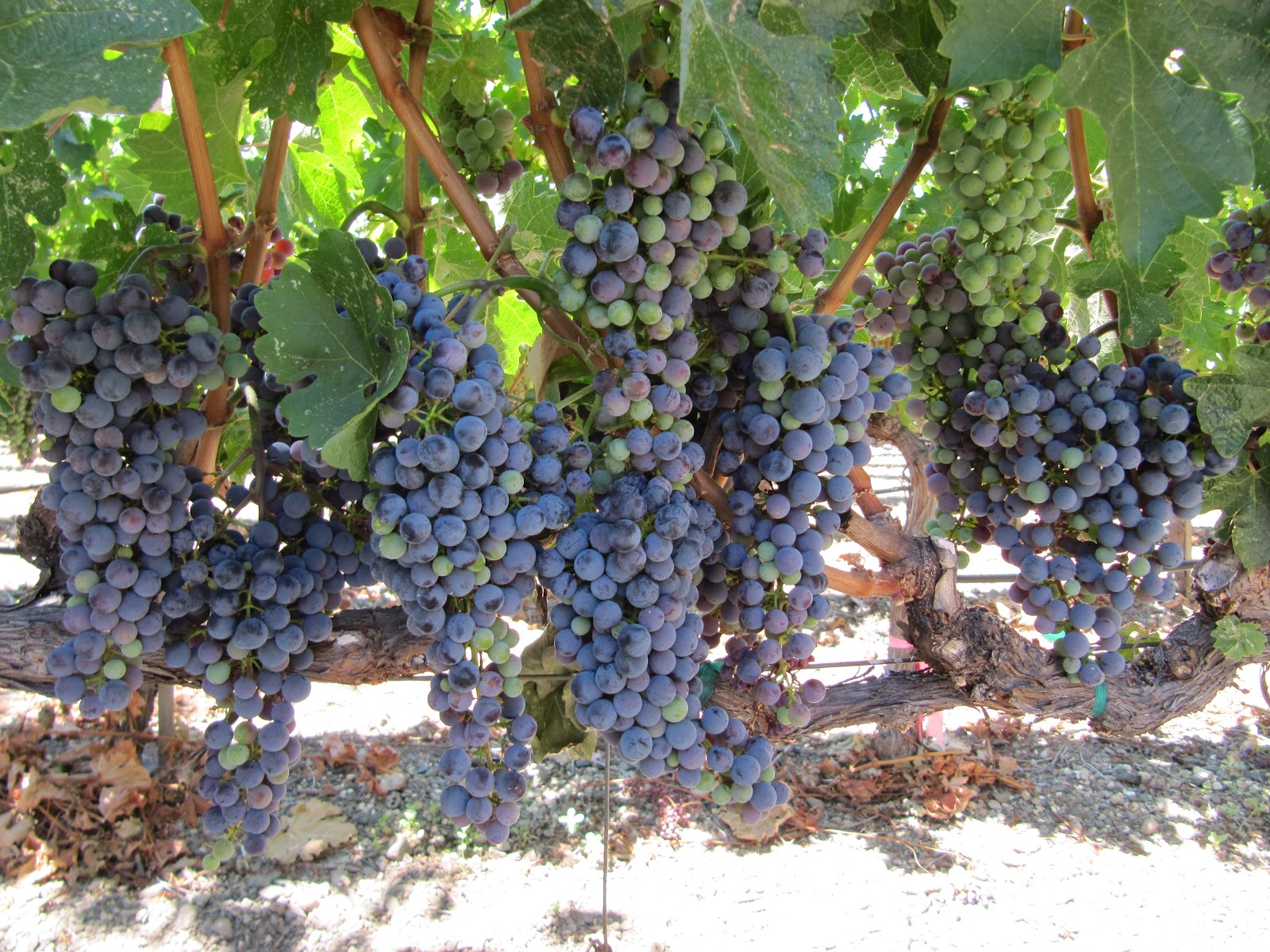
| Ripening Grapes by Nina Zolotow |
Wednesday, April 18, 2012
The Direct Opposite of Taking Life for Granted
| Beauty is Everywhere in Vietnam by Michele McCartney-Filgate |
Tuesday, February 28, 2012
Post Asana Assessment
by Baxter
One of the most essential skills for yoga asana practitioners to develop is something I like to call “post asana assessment.” And although I wish it were a skill that beginners came downloaded with, my personal experience and what I have observed with my students over the years has shown me that it is a skill you only learn with encouragement and practice. So what, you may be asking, is this PAA? Quite simply, it is the deliberate pause in your asana practice directly after completing a particular pose, the purpose of which is to assess the effects, positive, negative or neutral, of your practice. This may seem pretty straight forward, yet unless post asana assessment is actively encouraged, it is often overlooked or simply not considered as part of practice.
Especially for the new student or even the student whose asana practice is of the faster flow variety, the time and space for such reflection is often not given in formal classes. And when newbies take their practice home for the first time, there is the tendency of the mind to be overwhelmed with planning ahead for what the next pose should be that the actual experience of the present moment is not fully appreciated. It is often the case that the mind is trying to recall a few ways of working in the pose heard via their memory of their last class experience, while simultaneously planning for what is coming next! So the chance to learn more deeply what the effect of the asana has been is lost.
Today, while reading through one of the many training texts I have collected over the years, I came across one by Esther Myers, a long time student of Vanda Scaravelli. (If you don’t know about Vanda, I would encourage you to read up on her fascinating story.) As I was already ruminating about post asana assessment as I read through the text, one comment by Esther caught my eye, as she talked about the role of breath in yoga:
“Breathing is essential to your Yoga practice. The focus of attention on the breath brings you to a state of quiet attention which is the essence of Yoga.”
This is so simply and beautifully stated. One way to enter into this process of post asana assessment is to initially notice the effect of the pose you have just completed on your breath: calming, speeding up, agitating, slowing down, etc. From there, consider resulting physical sensations in the most objective terms possible, such as, where do I feel sensation now, is there a sense of effort still lingering, am I experiencing fatigue or weakness, vitality or aliveness? And what is the effect on my mood or emotions?
What might initially seem cumbersome and challenging to do after your poses can become quite efficient and fruitful with practice. It can literally guide and help you create wonderful practices that are in alignment with any intention you may have set for your practice on a given day. The feedback may send you in new and unimagined directions as you notice an openness, strength or vulnerability that could easily be missed if you were to work in a more automatic way.
If it seems to daunting to do after each pose of a practice, consider spacing out your post asana assessments after every few poses until it becomes easier to integrate the assessments into your existing practice style. I feel this skill advances you from the beginner to intermediate level of awareness that leads to a rewarding, relevant and safe practice over time.
For more by Esther, see The Ground, The Breath, and the Spine by Esther Myers, Lynn Wylie.
One of the most essential skills for yoga asana practitioners to develop is something I like to call “post asana assessment.” And although I wish it were a skill that beginners came downloaded with, my personal experience and what I have observed with my students over the years has shown me that it is a skill you only learn with encouragement and practice. So what, you may be asking, is this PAA? Quite simply, it is the deliberate pause in your asana practice directly after completing a particular pose, the purpose of which is to assess the effects, positive, negative or neutral, of your practice. This may seem pretty straight forward, yet unless post asana assessment is actively encouraged, it is often overlooked or simply not considered as part of practice.
Especially for the new student or even the student whose asana practice is of the faster flow variety, the time and space for such reflection is often not given in formal classes. And when newbies take their practice home for the first time, there is the tendency of the mind to be overwhelmed with planning ahead for what the next pose should be that the actual experience of the present moment is not fully appreciated. It is often the case that the mind is trying to recall a few ways of working in the pose heard via their memory of their last class experience, while simultaneously planning for what is coming next! So the chance to learn more deeply what the effect of the asana has been is lost.
![]() |
| Rock and Reflection by Joan Webster |
“Breathing is essential to your Yoga practice. The focus of attention on the breath brings you to a state of quiet attention which is the essence of Yoga.”
This is so simply and beautifully stated. One way to enter into this process of post asana assessment is to initially notice the effect of the pose you have just completed on your breath: calming, speeding up, agitating, slowing down, etc. From there, consider resulting physical sensations in the most objective terms possible, such as, where do I feel sensation now, is there a sense of effort still lingering, am I experiencing fatigue or weakness, vitality or aliveness? And what is the effect on my mood or emotions?
What might initially seem cumbersome and challenging to do after your poses can become quite efficient and fruitful with practice. It can literally guide and help you create wonderful practices that are in alignment with any intention you may have set for your practice on a given day. The feedback may send you in new and unimagined directions as you notice an openness, strength or vulnerability that could easily be missed if you were to work in a more automatic way.
If it seems to daunting to do after each pose of a practice, consider spacing out your post asana assessments after every few poses until it becomes easier to integrate the assessments into your existing practice style. I feel this skill advances you from the beginner to intermediate level of awareness that leads to a rewarding, relevant and safe practice over time.
For more by Esther, see The Ground, The Breath, and the Spine by Esther Myers, Lynn Wylie.
Wednesday, January 18, 2012
What is an advanced yoga practice?
by Nina
A number of years ago, I encouraged a close friend of mine, M, to join me in taking Rodney Yee’s advanced class. Even though she had a muscular, athletic, and stiff body that made doing super bendy poses difficult, if not impossible, I knew that she understood how to take care of herself in class, that she would adapt the poses for her particular body type and keep herself safe, so I wasn’t worried about the class being too hard for her. She was interested, however, she expressed some concerns about not being “advanced” enough for the class. I decided to discuss the matter with our teacher himself, feeling fairly sure of what he was going to say. But what he told me when I asked him if she was “advanced” not only took me by surprise but has stuck with me all these years, transforming my thinking about the asana practice in general. What he said was this:
“Of course she’s advanced enough. M does yoga more mindfully than any student I’ve ever seen.”
And here I’d been thinking that being advanced meant being capable of doing difficult poses, like 10 minute headstands or extreme backbends, at some level or another! But doing yoga “mindfully”—now, here was goal we could pursue for our lifetimes and no matter our level of physical capacity was, we would always have the the ability to go deeper and deeper into the practice.
I’m thinking about this today because I’m helping a new friend of mine adapt her practice to allow her to heal from an ongoing injury. It’s taken her a long time to even be ready to temporarily give up certain poses and ways of practicing, because she felt such regrets about excluding poses from her practice that she used to be able to do with such great enjoyment.
But as Baxter mentioned yesterday in his post on wrist care (see "Wristful Wrists: How to Keep Your Wrists Safe"), sometimes rest is the best way to heal from an injury. So being willing to adopt mindfulness as a goal in the practice rather than achievement is a necessary element in being able to heal from an injury.
People who are aging may find themselves in a similar position, not necessarily due to injury but simply due to the physical changes that come along with aging. To be honest, I used to have what I sometimes call a “semi-fancy” yoga practice. But in the last few years, I developed arthritis in my right hip that makes it impossible to do seated poses that involve a lot of external rotation. Lotus and half lotus are now impossible for me, and seated forward bends and twists that require certain leg positions are painful and difficult. And I now need props in many of the standing poses now. Still there is no question I consider my practice more advanced these days than it was in the years when I regularly took the East Bay’s most “advanced” yoga class.
A number of years ago, I encouraged a close friend of mine, M, to join me in taking Rodney Yee’s advanced class. Even though she had a muscular, athletic, and stiff body that made doing super bendy poses difficult, if not impossible, I knew that she understood how to take care of herself in class, that she would adapt the poses for her particular body type and keep herself safe, so I wasn’t worried about the class being too hard for her. She was interested, however, she expressed some concerns about not being “advanced” enough for the class. I decided to discuss the matter with our teacher himself, feeling fairly sure of what he was going to say. But what he told me when I asked him if she was “advanced” not only took me by surprise but has stuck with me all these years, transforming my thinking about the asana practice in general. What he said was this:
“Of course she’s advanced enough. M does yoga more mindfully than any student I’ve ever seen.”
And here I’d been thinking that being advanced meant being capable of doing difficult poses, like 10 minute headstands or extreme backbends, at some level or another! But doing yoga “mindfully”—now, here was goal we could pursue for our lifetimes and no matter our level of physical capacity was, we would always have the the ability to go deeper and deeper into the practice.
![]() |
| Year-Old Snow and New Snow by Philip Amdal |
But as Baxter mentioned yesterday in his post on wrist care (see "Wristful Wrists: How to Keep Your Wrists Safe"), sometimes rest is the best way to heal from an injury. So being willing to adopt mindfulness as a goal in the practice rather than achievement is a necessary element in being able to heal from an injury.
People who are aging may find themselves in a similar position, not necessarily due to injury but simply due to the physical changes that come along with aging. To be honest, I used to have what I sometimes call a “semi-fancy” yoga practice. But in the last few years, I developed arthritis in my right hip that makes it impossible to do seated poses that involve a lot of external rotation. Lotus and half lotus are now impossible for me, and seated forward bends and twists that require certain leg positions are painful and difficult. And I now need props in many of the standing poses now. Still there is no question I consider my practice more advanced these days than it was in the years when I regularly took the East Bay’s most “advanced” yoga class.
Tuesday, November 29, 2011
What is Mindfulness?
by Nina
In Baxter’s post yesterday (see here), he described how a student of his, after a day of mindful yoga, was able to achieve a state of detached awareness that helped her deal more effectively with her teenaged son. And in my original post on the relaxation response (see here), I mentioned mindful yoga practice as one of several ways to trigger the relaxation response. So today seemed like a good day to explain what we mean by mindfulness and to say a little about how it helps.
“All of us have the capacity to be mindful. All it involves is cultivating our ability to pay attention in the present moment.” —Jon Kabat-Zinn
You might not realize this, but your thoughts alone can make you stress out. Worries about the future, regrets over the past, and judgments about yourself and others can trigger the stress response because you are essentially telling yourself that you are danger! In fact, in many cases, it is your thoughts about what’s going on that makes you stress out, not the situation itself.
Practicing mindfulness means becoming an impartial witness to your thoughts and experiences as you have them. To do this, step back and tune into the constant judging and reacting to inner and outer experiences that constantly stream through your mind.
“The eye is for seeing; the mind creates doubt; the wisdom faculty is for ascertaining [the nature of things]; the Field-Knower abides as the witness of all these processes.” —Moksha-Dharma
Yogis believe that there is a witness or drashtri (the Field-Knower, the Seer or Pure Awareness) present in all of us. And this witness is the spark of the divine, the single, incomprehensible consciousness that unites all beings, that dwells within.
So how does this witness help with stress levels? Being in mindful state gives you a break from obsessive thoughts about the past or anxiety about the future. And when you are free from stressful thoughts of danger, the relaxation response kicks in.
Being mindful also teaches you to recognize the physical and mental symptoms of stress so you can nip them in the bud by using your favorite stress management techniques. And it teaches you about your thought patterns, so you can learn not to react on “auto pilot” (Baxter’s story about Maleena is example of this), which can give you the ability to live more peacefully.
To practice mindful yoga, simply bring your witnessing frame of mind into your yoga practice. Jon Kabat-Zinn expresses how to do this so well that I’m going to quote him:
“We practice yoga with the same attitude we bring to the sitting mediation or the body scan. We do it without striving and without forcing. We practice accepting our body as we find it in the present, from one moment to the next. While stretching or lifting or balancing, we learn to work at our limits, maintaining moment-to-moment awareness. We are patient with ourselves. As we carefully move up to our limits in a stretch, for instance, we practice breathing at that limit, dwelling in the creative space between not challenging the body at all and pushing it to far.”
You can also practice yoga as a moving meditation by focusing on your breath during your practice or on a particular physical sensation, such as spreading your toes evenly on the ground in all your poses. Mindful yoga is one of my favorite ways to de-stress, as I bring into my home practice subtle physical alignment tips I learn from my regular teacher, and then just experiment and feel....
In Baxter’s post yesterday (see here), he described how a student of his, after a day of mindful yoga, was able to achieve a state of detached awareness that helped her deal more effectively with her teenaged son. And in my original post on the relaxation response (see here), I mentioned mindful yoga practice as one of several ways to trigger the relaxation response. So today seemed like a good day to explain what we mean by mindfulness and to say a little about how it helps.
“All of us have the capacity to be mindful. All it involves is cultivating our ability to pay attention in the present moment.” —Jon Kabat-Zinn
| Poppy by Joan Webster |
Practicing mindfulness means becoming an impartial witness to your thoughts and experiences as you have them. To do this, step back and tune into the constant judging and reacting to inner and outer experiences that constantly stream through your mind.
“The eye is for seeing; the mind creates doubt; the wisdom faculty is for ascertaining [the nature of things]; the Field-Knower abides as the witness of all these processes.” —Moksha-Dharma
Yogis believe that there is a witness or drashtri (the Field-Knower, the Seer or Pure Awareness) present in all of us. And this witness is the spark of the divine, the single, incomprehensible consciousness that unites all beings, that dwells within.
So how does this witness help with stress levels? Being in mindful state gives you a break from obsessive thoughts about the past or anxiety about the future. And when you are free from stressful thoughts of danger, the relaxation response kicks in.
| Pineapple Sage by Joan Gibson |
To practice mindful yoga, simply bring your witnessing frame of mind into your yoga practice. Jon Kabat-Zinn expresses how to do this so well that I’m going to quote him:
“We practice yoga with the same attitude we bring to the sitting mediation or the body scan. We do it without striving and without forcing. We practice accepting our body as we find it in the present, from one moment to the next. While stretching or lifting or balancing, we learn to work at our limits, maintaining moment-to-moment awareness. We are patient with ourselves. As we carefully move up to our limits in a stretch, for instance, we practice breathing at that limit, dwelling in the creative space between not challenging the body at all and pushing it to far.”
You can also practice yoga as a moving meditation by focusing on your breath during your practice or on a particular physical sensation, such as spreading your toes evenly on the ground in all your poses. Mindful yoga is one of my favorite ways to de-stress, as I bring into my home practice subtle physical alignment tips I learn from my regular teacher, and then just experiment and feel....
Subscribe to:
Posts (Atom)